
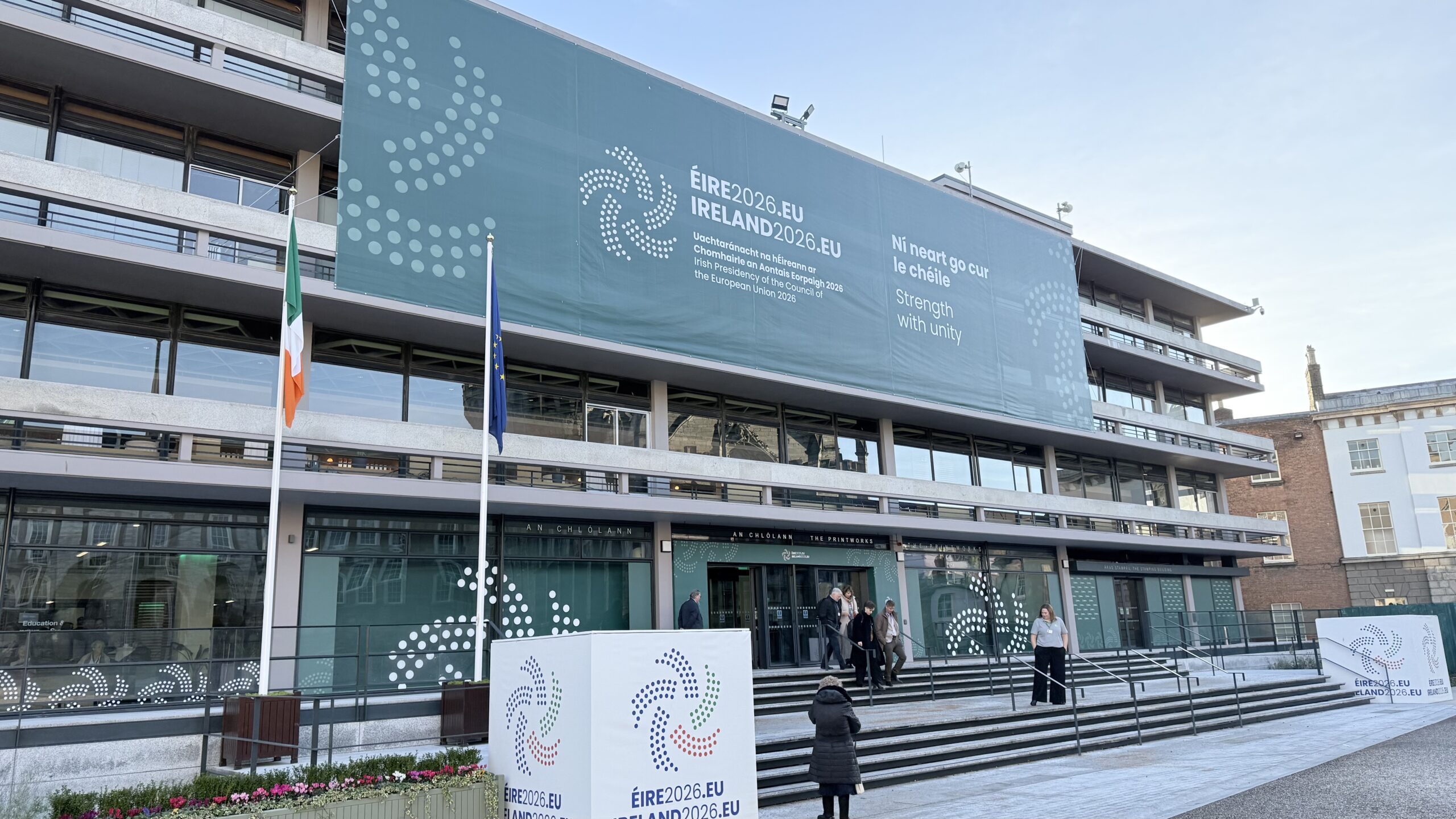
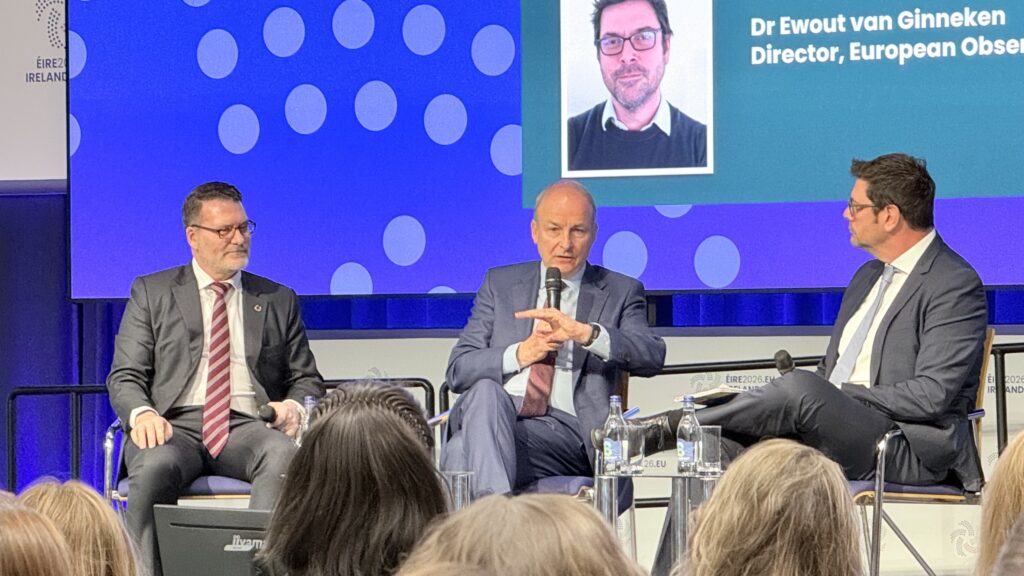
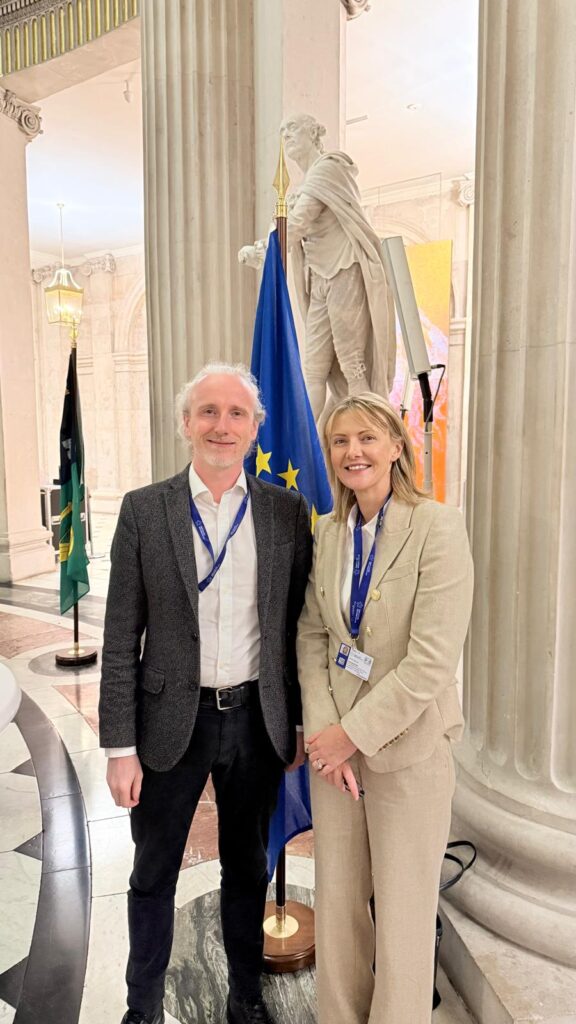
16–17 November 2026, Dublin, Ireland – I was happy to attend, on behalf of the European Federation of Psychologists’ Associations (EFPA), the Irish Presidency of the Council of the European Union conference “Maximising EU Potential through Health: Securing Our Future Through Prevention, Innovation and Equity” organised by Ireland’s Department of Health.
The event brought together European policymakers, healthcare professionals, researchers, civil society organisations and patient representatives to discuss how prevention, innovation and fair access to care can help strengthen health systems across Europe. One of the main topics was the growing impact of noncommunicable diseases (NCDs), including cardiovascular diseases and mental health conditions.
A key message from the conference was that mental and physical health are closely connected, and that effective prevention and healthcare need to take a comprehensive biopsychosocial approach. Psychological and behavioural factors play an important role in the development, prevention, treatment and management of many health conditions, making psychology relevant across almost every area of healthcare.
The focus on innovation and equity also highlighted the need to make sure that new technologies and healthcare approaches are informed by psychological and behavioural science, reflect people’s needs and are accessible to different communities. EFPA highlighted the importance of using digital technologies safely to help people navigate healthcare systems, reaching communities where they are, and making use of technologies people already use in everyday life to support health and wellbeing.
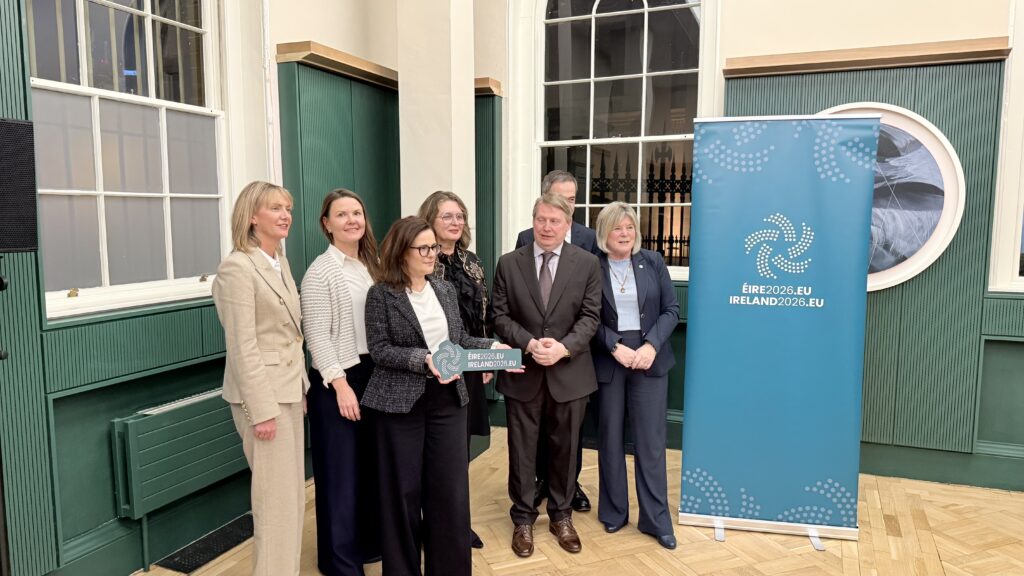
During the event, Minister for Mental Health Mary Butler and WHO Regional Advisor for Mental Health Ledia Lazëri launched the Digital Mental Health Roadmap for the WHO European Region (2027–2035). The roadmap sets out a plan to improve access to mental health services through the safe use of digital technologies, including online therapies, mobile apps and AI systems.
It outlines six priority areas: policy and strategy, governance, regulation, digital infrastructure, workforce development, and monitoring and evaluation. Importantly, the roadmap reflects Principle 6 of EFPA’s six digitalisation priorities: digital technologies should support, rather than replace, human-centred mental healthcare.
This also connects with EFPA’s recent contributions to the WHO’s work on noncommunicable diseases and wellbeing, as well as the WHO roadmap on AI. Through this work, EFPA has continued to highlight the need to include psychological expertise in health promotion, prevention, multidisciplinary healthcare, innovation and workforce planning.
Overall, the conference highlighted an important message for Europe’s health agenda: making the most of our healthcare systems means recognising that mental health is an essential part of overall health, and that psychology has an important role to play across prevention, treatment and wellbeing.
Further information:
1 – Irish Presidency conference – Maximising EU Potential through Health: https://www.gov.ie/en/department-of-health/collections/irelands-presidency-conference-on-maximising-eu-potential-through-health/
2 – Digital mental health roadmap for the WHO European Region (2027–2035) https://iris.who.int/items/1c86e628-de62-4c63-accd-bb6e419cdcc0
3 – EFPA highlights the role of psychology in WHO’s work on noncommunicable diseases and well-being: https://www.efpa.eu/efpa-highlights-the-role-of-psychology-in-whos-work-on-noncommunicable-diseases-and-well-being/
4 – EFPA calls for psychological science to be integrated into WHO’s roadmap on artificial intelligence: https://www.efpa.eu/efpa-calls-for-psychological-science-to-be-integrated-into-whos-roadmap-on-artificial-intelligence/
5 – EFPA Digitalisation Priorities https://www.efpa.eu/digitalisation